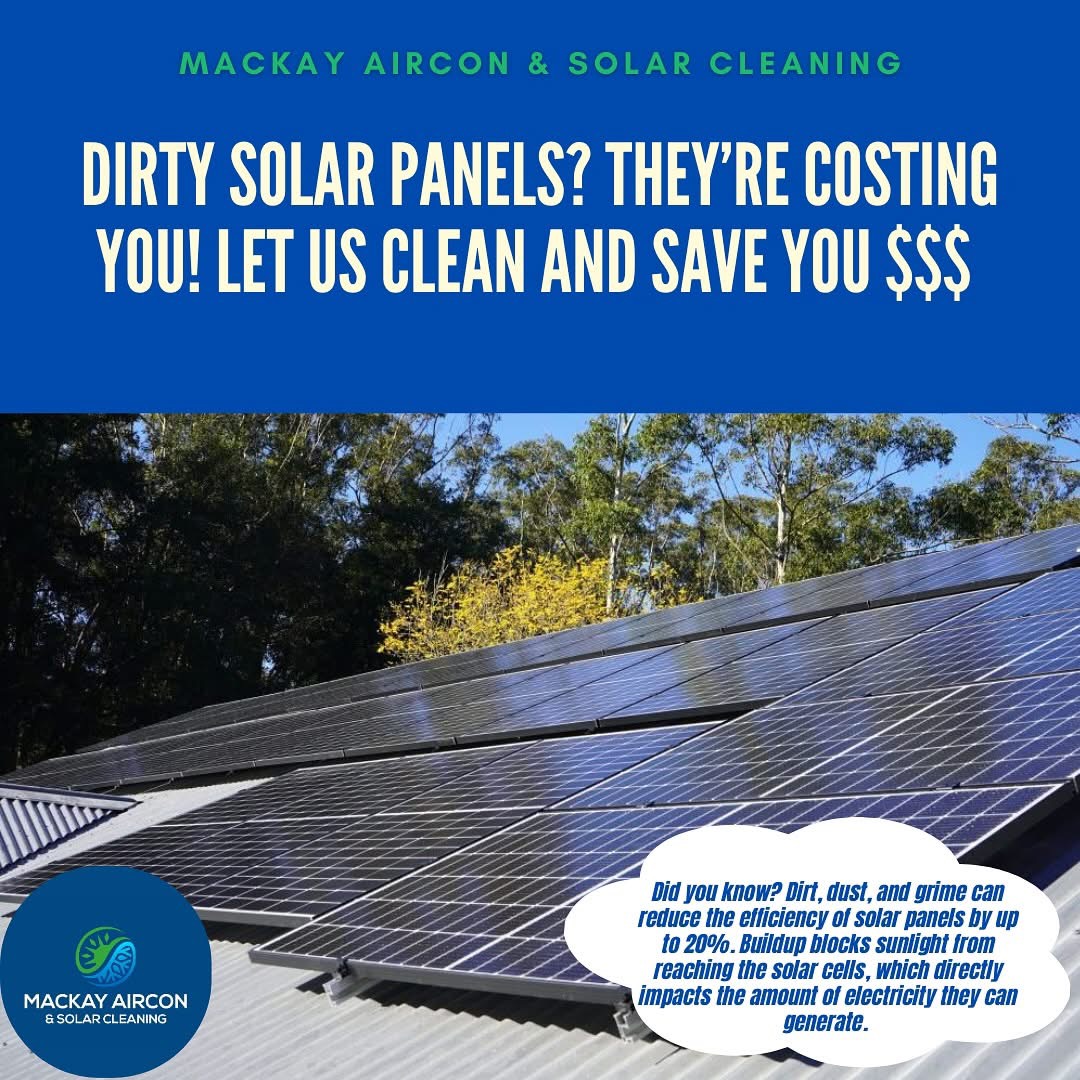
Short answer: yes. Solar panels make electricity from sunlight hitting the cells — and anything sitting between the sun and those cells costs you power. Dirt, dust and grime can cut panel efficiency by up to 20%, which means higher power bills and a slower payback on your solar investment.
Here in Mackay, panels cop a double hit: coastal salt spray for homes near the beaches, plus dust, pollen and bird droppings everywhere else.
What's actually sitting on your panels
- Dust and pollen — builds up gradually and blocks sunlight
- Bird droppings — bake on hard and create hot spots that can damage cells
- Salt spray — coastal homes get a hazy film that rain won't shift
- Leaf litter and debris — traps moisture and encourages lichen growth
But doesn't rain clean them?
It's the most common myth we hear. Rain rinses off a little loose surface dust — about as well as rain washes your car. It won't shift baked-on bird droppings, salt film or greasy grime. If anything, light rain mixed with dust can leave panels dirtier than before.
How often should panels be cleaned?
Most solar manufacturers recommend professional cleaning every 6 to 12 months to keep output up and warranty conditions met. In Mackay's climate — especially within a few kilometres of the coast — the 6-month end of that range is usually the right call.
A professional clean uses a soft brush and water — no harsh chemicals and no high-pressure washing that can void your warranty. While we're up there, we also visually check for cracked panels, bird nesting and loose wiring, so small problems get caught early.
The bottom line
Clean panels simply make more power. At from $10 per panel, a professional clean is one of the cheapest ways to protect the investment on your roof — and most customers see the difference on their very next bill.